What TypeSafe announced
On September 15, 2026, TypeSafe AI announced early access to Jev, its first System One model. The company describes a model that receives an application state and a set of typed questions, then returns structured judgments. This is a different interface from a chatbot that writes an open-ended answer.
The launch post reports low latency, low input-token pricing and calibrated probabilities. Those numbers come from the vendor's own demonstrations and evaluations. They are useful claims to test, not a measured Cendar Lab result or a promise for every workload and region.
References: TypeSafe AI — Introducing System One Models & JevTypeSafe AI — Jev introduction and question types
Choice, Score and Noul
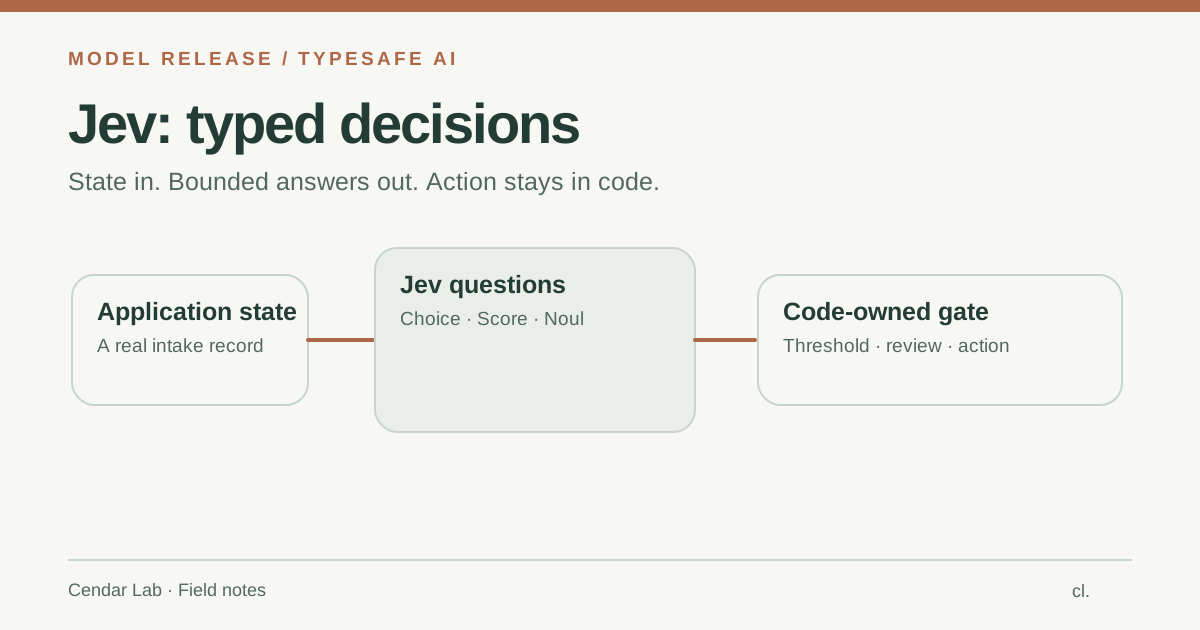
Choice selects one option from a list supplied by the caller. Score evaluates a state against a rubric. Noul answers a true-or-false style question with a value from zero to one. The application defines the possible answers before sending the request and can ask several independent questions about the same state in one call.
Imagine support intake. One Choice question routes a request to billing, product support or human review. A separate Score question estimates completeness. The program can require a completeness threshold before routing; Jev does not decide who has account access or send a reply by itself.
References: TypeSafe AI — Jev introduction and question types
Where it belongs in an agent or workflow
A narrow decision can sit inside a larger workflow: classify an incoming record, choose a specialist tool, or score whether an answer needs human review. The harness or application still manages context, tool calls, retries and the final action. A typed model can replace a brittle text-parsing step, but it does not replace the policy surrounding that step.
Start with decisions that already have a known answer set and labeled examples. If ordinary code can answer exactly, use ordinary code. If the task requires a long explanation, open-ended code generation or extended reasoning, Jev's documented output interface is not a fit.
References: TypeSafe AI — Jev introduction and question types
A practical evaluation before production
Build a representative set of cases from your own process, including ambiguous and rare cases. Freeze the question wording, options and threshold before evaluating. Compare the model's answer with a human-reviewed label, then inspect errors by class rather than reporting one aggregate accuracy number.
Check calibration as well as accuracy: when a result says 0.8, does that confidence align with observed correctness in that group? Measure end-to-end time from your deployment region, not only model time. Record input size, retries, provider failures and price at the date tested. Keep an abstain or review path for uncertain and high-impact decisions.
References: TypeSafe AI — Introducing System One Models & JevTypeSafe AI — Jev introduction and question types