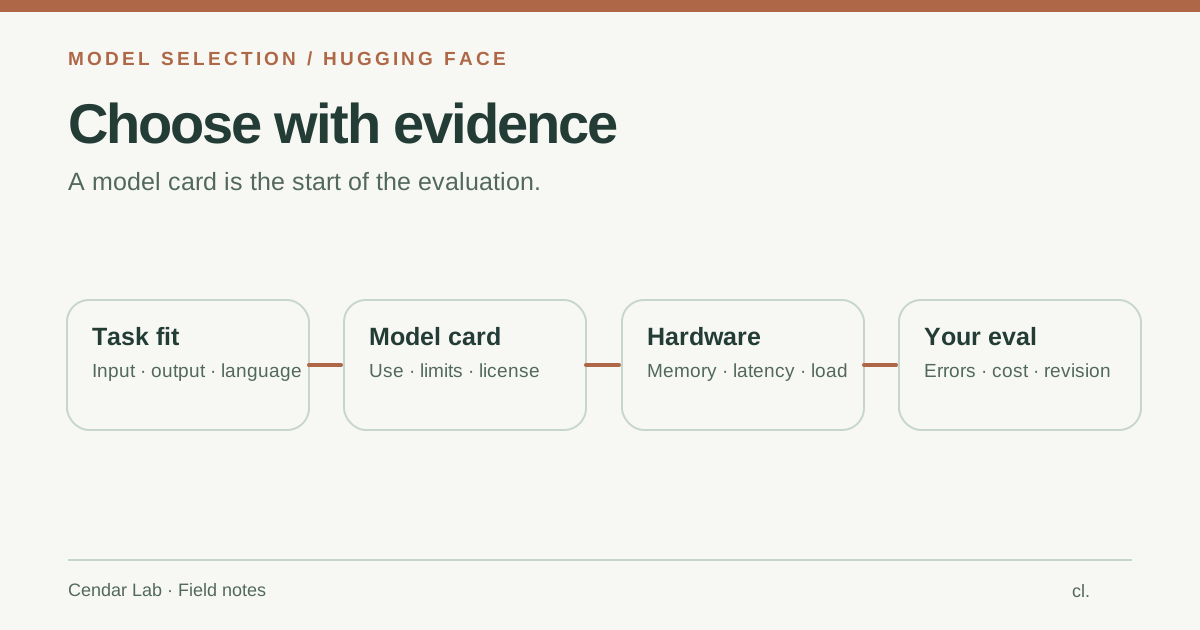
Start with the task and deployment boundary
Write down what the system must produce and how a result will be checked: classification label, retrieved answer, code patch, transcript or generated text. Define languages, input length, response time, concurrent users and whether data can leave your environment. These constraints narrow the Hub more effectively than a broad search for the ‘best model’.
Decide whether you need weights you can operate, a hosted inference endpoint or only a research baseline. Each choice has different maintenance and data-handling implications. The Hub contains repositories for many tasks and libraries; the repository page is the beginning of an evaluation, not deployment approval.
References: Hugging Face — Models on the Hub
Read the model card as an evidence document
A useful card describes intended uses, limitations, datasets, training and evaluations. Check whether the reported metric uses a task and language close to yours, and whether the model author supplies the evaluation method. Missing information is a question to resolve, not permission to assume a capability.
Inspect the license and any access conditions before incorporating weights in a product. A base model, adapter, merged model or quantized copy may have different files and relationships. Pin the repository revision so a later update cannot silently change the artifact used by your tests.
References: Hugging Face — Model Cards
Check the actual hardware fit
Model parameters alone do not determine runtime memory. Precision, quantization, context length, batching and the serving engine also matter. The Hub can show hardware compatibility for some GGUF and MLX files, but an estimate should be checked on the machine that will serve your workload.
Run a short representative batch and record peak memory, first-token time, output rate and failures. Include the preprocessing and network path in user-facing latency. A small model that meets the task may be preferable to a larger one that exceeds the memory or response budget.
References: Hugging Face — Hardware compatibility
Build an evaluation that can reject a model
Reserve examples the team did not use while choosing prompts or thresholds. Include common, difficult and harmful failure cases. Compare candidates with the same inputs and scoring rule, then inspect errors by category. For generated answers, check factual support and refusal behavior alongside fluency; for classifiers, inspect each class and uncertainty threshold.
Keep the chosen revision, model card, license review, test set definition and hardware configuration with the release record. Repeat the evaluation when weights, quantization, prompts or serving software change. That record is more useful than a screenshot of a public leaderboard.